

Why Your Attic Is Making Your House Hot — And What Your Roof Has to Do With It
Is your AC working fine, but not properly cooling your house? If so, there's a good chance the real problem isn't your HVAC — it's what's happening in the space between your living room ceiling and your roof.
Your attic plays a surprisingly big role in how comfortable your home is, how long your roof lasts, and how much you pay every month to keep things cool. Here's what's actually going on up there, and what you can do about it.
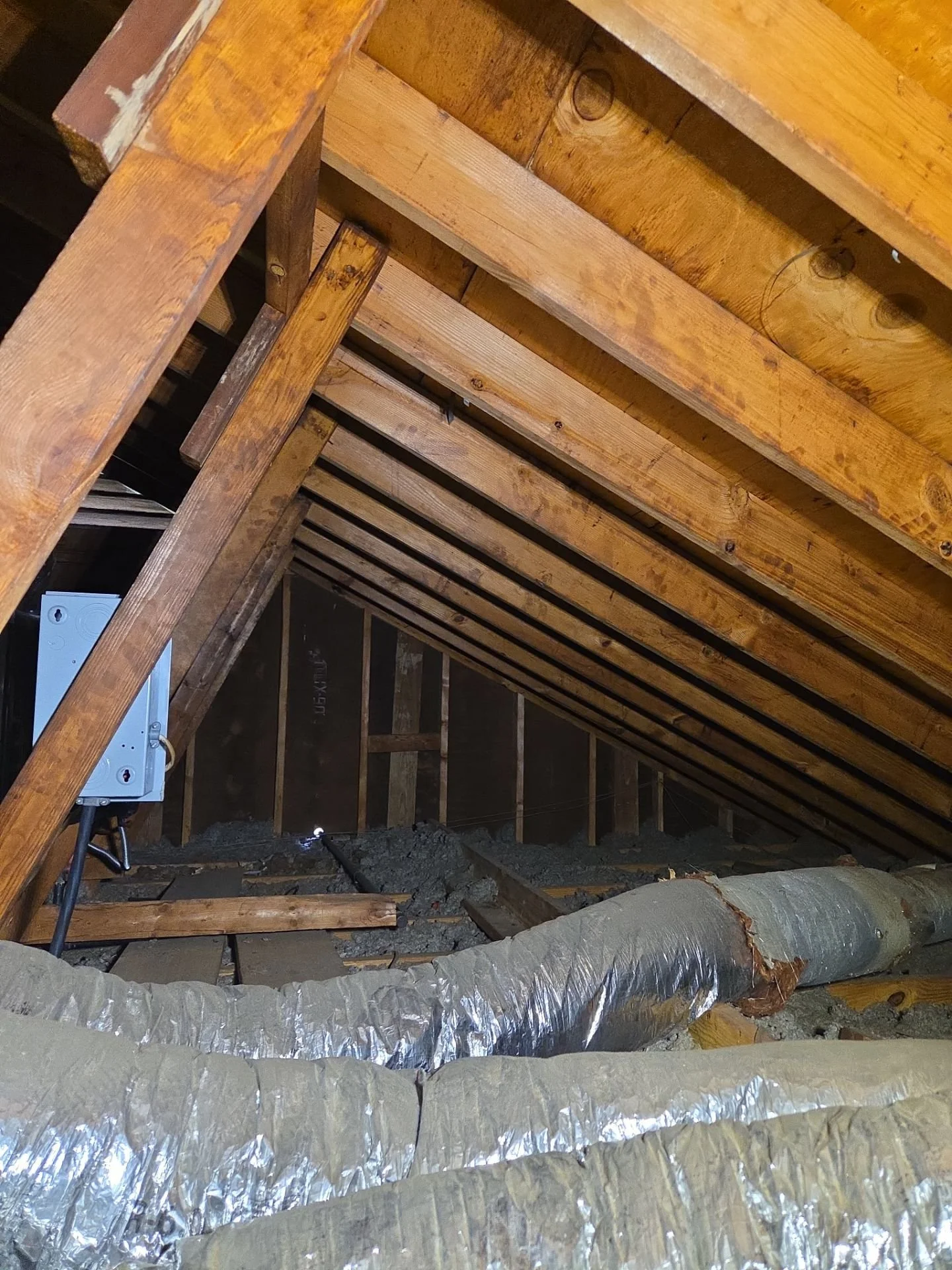
What Happens to an Attic in an Alabama Summer
We all know how brutal Alabama summers can be. With 90°F+ days and humidity that makes it feel even hotter, your AC might be working hard to cool your living space while your attic is slowly becoming an oven.
If your attic is not properly ventilated, hot air has nowhere else to go except downward into your living space. Your AC kicks on, then stays on, and your home never fully cools off. In turn, your energy bill gets higher.
That trapped heat doesn't just cost you money on utilities. Over time, it can do damage to your roof from the inside out.
How Attic Ventilation Works (and Why It Matters)
Think of proper attic ventilation as a simple exchange: cool air comes in low (through soffit vents at the eaves), moves through the attic, and pushes hot air out high (through ridge vents or gable vents at the peak). This continuous air flow does two important things:
It carries superheated air out before it radiates into your living space
It removes moisture-laden air before it condenses on your roof's wood decking
According to ENERGY STAR, this natural airflow — when combined with proper insulation — is the key to both a durable and energy-efficient home. The insulation blocks heat from transferring into your living space, while ventilation moves the hot air out before it ever builds up.
“In the summer, natural air flow in a well-vented attic moves super-heated air out of the attic, protecting roof shingles and removing moisture. The insulation will resist heat transfer into the house.”
The industry standard is roughly one square foot of net free vent area for every 300 square feet of attic floor space — split evenly between intake at the bottom and exhaust at the top. When that balance is off, the whole system breaks down.
Good Vs. Bad Attic Ventilation
Common Ventilation Problems
🚫 Blocked or Missing Soffit Vents
If soffit vents are blocked — whether by insulation, debris, or just not being installed correctly — hot air has nowhere to go and the exhaust vents at your roof’s ridge is unable to pull fresh air through. ENERGY STAR calls this the most common mistake homeowners make when installing insulation: covering soffit vents and killing airflow at the eaves.
💨 Too Many Exhaust Vents, Not Enough Intake Vents
In an attic venting system, there needs to be a balance of intake (soffit) vents and exhaust (ridge, box, & turbine) vents in order for hot air to properly escape. Too much exhaust without enough soffit intake can throw attic airflow out of balance. Instead of pulling fresh air from outside, the system may pull air from leaks in the home, which reduces efficiency and can make the AC work harder.
⚠️ Powered Attic Fans Without Proper Sealing
Attic fans can help — but only if your attic is well-sealed from the rest of the house and soffit vents are not blocked. Otherwise, attic fans will pull your cool, conditioned air upward into the attic, meaning you end up paying to cool your attic with your air conditioner.
Good Ventilation
✅ Proper Balance of Exhaust Vents and Soffit Vents
Having the right amount of intake and exhaust creates a balanced, whole-attic airflow that doesn't rely on electricity and works around the clock. For houses with limited ridge length (which can be common in some ranch-style homes), gable vents or powered ventilators may supplement the system as well.
✅ Rafter Vents to Keep Airflow Moving
Rafter vents, or baffles, are installed between rafters where the ceiling meets the attic floor and keep the channel open for air to flow in through the soffits even when insulation is present right to the eave. Without them, insulation can potentially block intake airflow.
✅ Powered Attic Fans With Enough Intake
With the proper amount of soffit vents, powered attic fans can help push hot air and humidity out through exhaust vents, working in tandem with your existing attic ventilation system to cool your attic (and ultimately, your whole home).
How Poor Ventilation Affects Your Roof
When your attic is not properly ventilated, it doesn’t just affect your energy bill — it can also shorten the life of your roof.
When warm, moist air gets trapped in a poorly ventilated attic, it condenses on cool surfaces — your roof decking, your rafters, your insulation. Over time, that moisture causes wood rot, weakens structural components, and creates the perfect conditions for mold growth.
What this looks like on a roof inspection: Staining on decking, soft spots when walked on, curling or buckling shingles, granule loss on asphalt shingles — all of these can be signs of heat and moisture damage driven by poor attic ventilation, not just age.
Asphalt shingles are especially vulnerable. Prolonged exposure to extreme attic heat dries out the oils in shingles, causing them to crack, curl, or blister — and that heat is coming from below, not just above. A well-ventilated attic can meaningfully extend the service life of your roof, which is part of why ventilation is built into the requirements for manufacturer warranties like Atlas's roofing systems.
Is Your Attic Properly Ventilated?
When NANOROOF™ Alabama does a free roof inspection, we look at more than just shingles. Our team looks at whether the intake/exhaust balance makes sense for your home, whether soffit vents are open and clear, and whether there are signs of moisture or heat damage on the decking that point to a ventilation problem.
If you've had a roofer come out before and they only talked about shingles, you may not have the full picture. Ventilation issues that go unaddressed in Alabama can mean a lot of future problems.
We believe in providing thorough roof assessments, our honest findings, and realistic recommendations as if your home was our own. No sales pressure.
Contact us today at 205.784.2527 to get started with your Free Roof & Attic Inspection.